
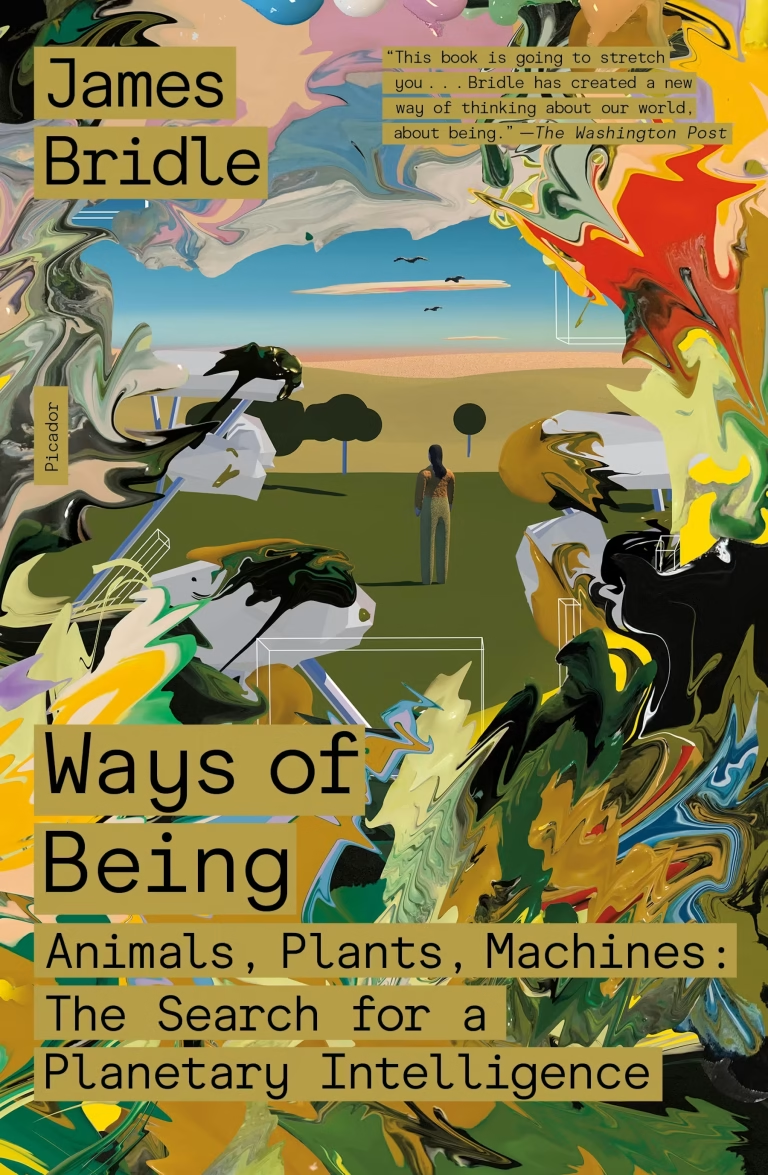
Paradigm Shifts Afoot: A Review of James Bridle’s Ways of Being

    This review explores the resources and insights of James Bridle’s vision for a transition from the individualistic paradigm of Western civilization to an inclusive “more-than-human” paradigm that encompasses the whole of human and non-human phenomena—animals, plants, planetary resources, and technologies. Bridle’s work is connected to resonant themes and authors across disciplines that illustrate the potential for Ways of Being, published in 2022, to become a path to a brighter planetary future for all beings.

    The Affordances of Mind: Contemplation, Ecology, and Jewish Thought

    The present essay outlines some possible frameworks for developing and articulating a Jewish contemplative ecology. The resources for this work within Jewish literary and theological activity are many and vast, stretching from the Hebrew Bible to rabbinic literature and into medieval and modern Jewish thought and philosophy; here I pay special attention to the writings of Jewish mystics, to the works the Kabbalists and Hasidic thinkers who have guided so much of my own intellectual and spiritual journey.

    Tree of Life, Womb of Creation: Ecology and Sexuality in the Christian Contemplative Tradition

    This article explores the intersection of Christian contemplative tradition and ecofeminism to address the spiritual roots of ecological imbalance. Through a critical examination of the Western tradition’s historical estrangement from nature and the divine feminine, the article proposes a contemplative ecology rooted in the Hebrew Wisdom tradition and the ancient Christian practice of “natural contemplation,” informed by a new reading of the Song of Songs. By integrating the divine feminine sheltered within the Wisdom tradition, as well as recognizing the deep ecological and sacramental implications of the Song, the article suggests a way to heal the rift between rationalist, androcentric, and patriarchal consciousness and its estranged other: woman, body, sex, and earth.

    Love’s Deepest Abyss: A Contemplative Ecology of Darkness

    The strange and alluring idea, that “Love’s deepest abyss is her most beautiful form,” shared by many of the apophatic tradition, reflects the sense that the abyssal is essential to the work of love, and that love can only be known by relinquishing the narrow conception of the self and becoming lost in the depths. The idea of the abyss has reemerged in our own time as part of a painful grammar of loss: a way of engaging and responding to social, political, cultural, environmental, spiritual, and personal losses too deep to name but impossible to ignore. It has also become critical to the work of reimagining the immense value of what we are losing, rekindling our capacity to love what is most precious to us, and helping us recover a sense of a shared life with all sentient beings. And it has become part of an emerging “contemplative ecology of darkness”—a radical spiritual practice that can help us learn again how to behold ourselves and other living beings as part of a larger whole.