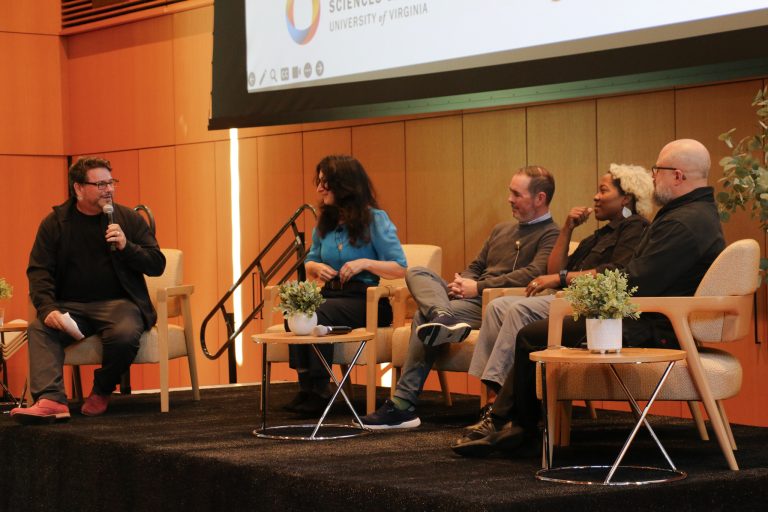
Over several days in March and early April 2021, Maria Kozhevnikov at the National University of Singapore convened a private online workshop, Bridging Esoteric Vajrayana Buddhism Practices with Science to Enhance Human Cognition. We are delighted to make the transcribed video proceedings of this workshop publicly available.

The goal of the workshop was to bring psychologists, neuroscientists, and medical scientists together with scholars and practitioners of Vajrayana Buddhism to examine the effects of mind-body practices from the Tibetan and Himalayan Buddhist traditions on how to enhance human cognition and creativity. Particular attention was paid to advanced Vajrayana practices, including tummo inner heat and dream yoga.
One way to understand advanced Vajrayana practices is to see them as methods for transcending normal limitations of the human condition − not only in terms of consciousness beyond the limits of space and time − but also the achievement of higher levels of performance and cognitive capacities. For a variety of historical, political and economic reasons, these advanced Vajrayana practices are currently on the verge of disappearance.
The aim of the workshop was twofold: First, to help attract scientific attention to these practices by uncovering their unique potential to enhance human cognition, thus contributing to the preservation of the intangible heritage of Vajrayana Buddhism. Second, to contribute to contemporary psychology and neuroscience by advancing scientific research on exceptional human cognition and creativity. The workshop proposed an outline for promising directions and future scientific projects to bridge Vajrayana practices with scientific research.
The workshop included renowned Vajrayana teachers from Tibet and Bhutan, who are actively teaching their monks and nuns advanced Vajrayana practices in their monasteries, nunneries, and retreat centers. This included H.E. Gyaltshen Tulku Rinpoche, a renowned retreat master in Bhutan and Wangdrak Gebchak Rinpoche, an abbot of Gebchak Nunnery in eastern Tibet, known for its accomplished female tummo practitioners. The workshop also included prominent cognitive psychologists, medical scientists, neuroscientists, and Buddhist Studies scholars.

DAY 1: March 26, 2021
VIDEO: Panel 1: Vajrayana practices, their origin, and classifications − Pre-recorded talks that present an outline of Vajrayana meditation practices and historical origins. The panel discusses the uniqueness of these practices, their relation to other Buddhist practices, and their composition in stages. Discussants: Geoffrey Samuel (University of Sydney) and David Germano (University of Virginia)
Vajrayana practices: Past, Present, and Future 1 − VIDEO: Interview with Gebchak Wangdrak Rinpoché on Vajrayana Meditative Practices − Discussion on how Vajrayana practices have been practiced in the past, their status in the present, and forecasts for the future. Discussants: Gebchak Wangdrak Rinpoché
DAY 2: March 27, 2021
VIDEO: Current neuroscience research on meditation. Differences between meditative practices of different Buddhist traditions from a neuroscience perspective − The panel discusses major findings of scientific research on meditation in general and meditation techniques currently under study. Discussants: Antonino Raffone (Sapienza University, Rome) and Rael Cahn (University of Southern California)
VIDEO: Current neuroscience research on Vajrayana practices and their possible neurocognitive and physiological mechanisms 1 & 2 − The panel discusses current scientific data on meditative practices and Vajrayana practices, emphasizing the uniqueness of neuroscience practices, their physiological, cognitive, and neural correlates. Discussants: Maria Kozhevnikov (National University of Singapore) and Arnaud Delorme (CNRS, University of California-San Diego)
Vajrayana practices: Past, Present, and Future 2 − VIDEO: Interview with H.E. Gyeltshen Rinpoché on Vajrayana Meditative Practices − Discussion about the current situation of Vajrayana practices in Bhutan and Tibet. Discussants: H.E. Gyeltshen Rinpoché
DAY 3: March 28, 2021
VIDEO: Advanced Vajrayana practices 1: The case of Tummo − The panel discusses topics related to research on the advanced Vajrayana practice of tummo and answers questions from participants. Discussants: David Germano (University of Virginia), Maria Kozhevnikov (National University of Singapore), and Alexander Levitov (East Virginia Medical School)
VIDEO: Creativity, Imagination, and Vajrayana Practices − The panel discusses the scientific research on creativity, ways that Vajrayana practices can contribute to understanding creativity, and relevant meditation techniques currently under study.
Discussants: Keith Holyoak (University of California-Los Angeles), Michael Sheehy (University of Virginia), Michael Lifshitz (McGill University), Maria Kozhevnikov (National University of Singapore)
VIDEO: Risks and benefits associated with advanced Vajrayana practices and their medical applications − The panel discusses topics related to research on the risks and dangers associated with Vajrayana practices as well as ethical questions related to these practices and their medical benefits. Discussants: Laurence Kirmayer (McGill University), Alexander Levitov (East Virginia Medical School), Jennifer Penberthy (University of Virginia)
DAY 4: April 2, 2021
VIDEO: Overcoming Attentional Limitations and Vajrayana Practices − The panel discusses scientific research on creativity and the ways Vajrayana practices can contribute to training attentional capacities. Discussants: Michael Inzlicht (University of Toronto), Antonino Raffone (Sapienza University, Rome), and Maria Kozhevnikov (National University of Singapore)
VIDEO: Advanced Vajrayana practices 2: Dream Yoga and Lucid Dreaming − The panel discusses topics related to dream yoga practices according to Vajrayana traditions, and the ways dream yoga can contribute to scientific research on lucid dreaming. Discussants: Benjamin Baird (University of Wisconsin), Michael Sheehy (University of Virginia), Ken Paller (Northwestern University)
VIDEO: How to Research Vajrayana practices? EEG Methodology Issues − The panel discusses problems related to conducting research with Vajrayana practitioners, possible methodologies, equipment, and training. Discussants: Dan Levendowski (Advanced Brain Monitoring) and Chris Berka (Advanced Brain Monitoring)
DAY 5: April 3, 2021
VIDEO: Bridging Vajrayana Practices with Science & Live Q&A Session − Discussion that focuses on possible ways to establish collaborations between Vajrayana scholars and practitioners in Bhutan and Tibet, and the scientific research community.
Talks with Rinpoches
VIDEO: Interview with H.E. Gyeltshen Rinpoché − Interview with H.E. Gyeltshen Rinpoché on Vajrayana meditation practices and retreat systems in the monasteries and retreat centers he oversees in eastern Bhutan.
VIDEO: Vajrayana Retreat Practices at Gebchak Nunnery: Part 1 − Talk by Gebchak Wangdrak Rinpoché about meditative retreat practices at Gebchak Nunnery in Nangchen, Tibet.
VIDEO: Vajrayana Retreat Practices at Gebchak Nunnery: Part 2 − Talk by Gebchak Wangdrak Rinpoché about meditative retreat practices at Gebchak Nunnery in Nangchen, Tibet.
Individual Topical Presentations
VIDEO: The Varieties of Tibetan Buddhist Meditation by David Germano (University of Virginia)
VIDEO: Tantric Practice and Scientific Research by Geoffrey Samuel
VIDEO: Meditation, Buddhist Psychology, and the Regulation of the Mind-Brain by Antonio Raffone (Sapienza University, Rome)
VIDEO: Meditation and the Neurophysiology of Self by Rael Cahn (University of Southern California)
VIDEO: Neurocognitive Mechanisms of Meditation by Arnaud Delorme (Paul Sabatier University)
VIDEO: Towards Scientific Conceptualization of Meditation: Part 1 by Maria Kozhevnikov (National University of Singapore)
VIDEO: Towards Scientific Conceptualization of Meditation: Part 2 by Maria Kozhevnikov (National University of Singapore)
VIDEO: Hemodynamic observations of Tummo yoga practitioners by Alexander Levitov (East Virginia Medical School)
VIDEO: The phenomenology and cognitive mechanisms of tulpamancy by Michael Lifshitz (McGill University)
VIDEO: Contemplative Techniques of Cognitive Lucidity and Embodiment in Vajrayana Dream Yoga by Michael Sheehy (University of Virginia)
VIDEO: Recent findings in the cognitive neuroscience of lucid dreaming by Benjamin Baird (University of Wisconsin)
VIDEO: From Neuroscience to Conversing with Lucid Dreamers by Ken Paller (Northwestern University)