Skip to content
Journal of Contemplative Studies
  • About
  • Articles
  • Special Issues
  • Authors
  • Currents
  • Submissions
Subscribe
Journal of Contemplative Studies

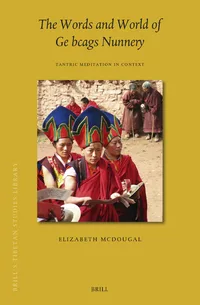
    Review of The Words and World of Ge bcags Nunnery

    Elizabeth McDougal’s The Words and World of Ge bcags Nunnery: Tantric Meditation in Context is a pioneering ethnographic study of a Nyingma nunnery located in the Eastern Tibet region of Nangchen, in present-day Qinghai province in China.

    Read More Review of The Words and World of Ge bcags NunneryContinue

    The Persistence of Habit: Tantric Engagements with Dharmakīrti’s View of Yogic Perception

    Dharmakīrti’s view of yogic perception (yogipratyakṣa) and mental cultivation (bhāvanā) has generated a good deal of discussion—in Dharmakīrti’s text tradition, in the works of its various critics, and in the contemporary study of Buddhist philosophy. However, tantric authors’ appeals to yogic perception are at odds with Dharmakīrti’s intentions in important ways. In this paper, I show why this appropriation of Dharmakīrti on yogic perception might be surprising, and then I reveal a tantalizing thread of Dharmakīrtian thinking about cultivation that nevertheless runs through certain Sanskrit Buddhist tantric debates.

    Read More The Persistence of Habit: Tantric Engagements with Dharmakīrti’s View of Yogic PerceptionContinue

    The Art of Imagination at the Intersection of Pramāṇa and Samaya: Normative Epistemology and Tantric Ethics in Early Philosophical Vajrayāna

    Buddhist thinkers in Tibet, most especially those associated with Tibet’s Nyingma or Old School of Buddhism, have produced a rich and understudied current of tantric philosophy advancing the authority, validity, and rationality of the tantric view. This paper examines the text, Establishing Appearance as Divine (Snang ba lhar bsgrub pa) by Rongzom (fl. 11th–12th c.). It is our earliest documented instance of a Tibetan “tantric pramāṇa”—that is, an approach characterized by the philosophical integration of exoteric philosophical thought and esoteric ritual and ideology. As such, and in contrast to more narrowly focused studies of Tibetan ritual or Tibetan philosophy, this paper details the form, content, and context of Rongzom’s tantric pramāṇa or epistemological discourse in terms of both classical epistemology and Buddhist Tantra. This study thus sheds light on the relationship envisioned between ritual and philosophy in traditions of Vajrayāna.

    Read More The Art of Imagination at the Intersection of Pramāṇa and Samaya: Normative Epistemology and Tantric Ethics in Early Philosophical VajrayānaContinue

    Practicing the “Threefold Mystery”: Rethinking a Shingon Ritual from Dichotomy to Dialectic

    After a century and a half of focus on Buddhist doctrine, academic attention is increasingly being paid to practice. What remains undertheorized, however, is the relation between the two. Despite its prevalence, the dichotomous representation of doctrine and practice is methodologically dysfunctional. As an alternative, it is proposed that the relation between doctrine and practice is better understood as dialectical, sometimes represented in Buddhist literature by the image of “the two wings of a bird.” This relation is explored by examining a particular tantric ritual, a Shingon homa.

    Read More Practicing the “Threefold Mystery”: Rethinking a Shingon Ritual from Dichotomy to DialecticContinue

    Portrait of a Poison: Datura in Buddhist Magic

    The psychoactive plant Datura metel appears across a range of traditions in premodern South Asia including the form of tantric Buddhism (Vajrayāna) located in the yoginī tantras, where the plant is most prominently used in instructions for bringing about magical acts (ṣaṭkarman). This paper explores the possibility that datura was consumed for its hallucination-inducing potential by considering how the plant was viewed and used in premodern South Asia through an ethnobotanical approach to relevant texts. It argues that the material potency of the plant as a dangerous poison gave it a magical potency that made it a favored ingredient in several hostile magic rites (abhicāra) and suggests that the line between material and magical is an inappropriate distinction to draw when examining these tantras.

    Read More Portrait of a Poison: Datura in Buddhist MagicContinue

Connect with us on social media

Instagram
Facebook

Copyright © 2025
Images credits


Published by the Contemplative Sciences Center at the University of Virginia
JCS ISSN: 3066-9030

  • About
  • Articles
  • Special Issues
  • Currents
  • Submissions
  • Subscribe
We use cookies to ensure that we give you the best experience on our website. If you continue to use this site we will assume that you are happy with it.