International Society For Contemplative Research (ISCR) Conference
The 3rd Conference of the International Society for Contemplative Research (ISCR) will be held on the campus of the University of North Carolina at Chapel Hill from November 3-6, 2025.
The ISCR 2025 Conference is an international conference for rigorous interdisciplinary investigation of contemplative practices in diverse contexts. This year’s theme is The Arc of Life and Death. The conference will feature pre-conference workshops, plenary sessions, contemplative practice periods, individual presentations, concurrent panels, and poster sessions focused on a diverse range of topics and best practices within contemplative research.
Members of the research team at JCS are excited to be in attendance!
ISCR Keynote Speakers
11/03 5:00PM
Tawni Tidwell, PhD, TMD: Can the Arc of Life and Death Culminate in a Single Moment? Bridging Worlds of Body and Consciousness in Tibetan Tukdam Meditation
11/04 8:30AM
Anne Vallely: Griefwork as Contemplative Practice: Reframing Mindfulness through Humanistic Inquiry
11/05 8:30AM
Robert W. Roeser, PhD: Towards a Developmental Contemplative Science
11/06 8:30AM
Cheryl Woods Giscombé, PhD: The Arc of Life and Death: Courageous, Contemplative Reflection on Family, Foundation, and Future to Foster Harmony and Well-Being
American Academy of Religion (AAR) Conference
The team at JCS is also very excited to announce the following sessions at the upcoming AAR Conference!
Saturday, 5:00 PM – 6:30 PM | Sheraton, Gardner (Third Floor) | Session ID: A22-412
Roundtable Session
Hosted by: Contemplative Studies Unit and Indigenous Religious Traditions Unit
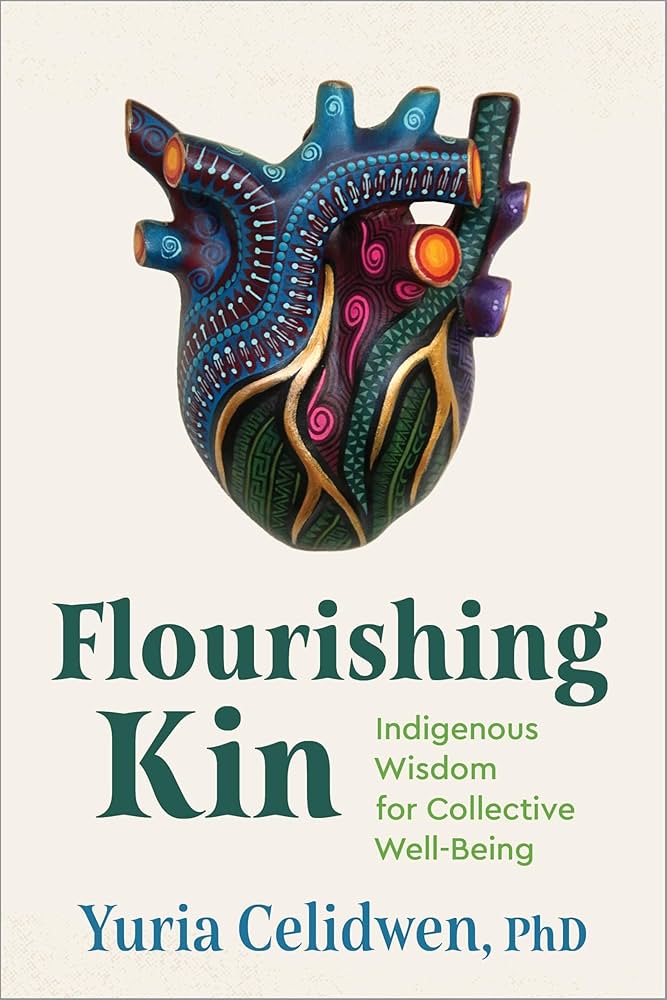
Theme: Author meets Critic: Flourishing Kin, Indigenous Wisdom for Collective Well-Being by Yuria Celidwen (Nahua/Maya Bats’il K’op)
Loriliai Biernacki, presiding
Celidwen’s book Flourishing Kin bridges Indigenous ontologies and methodologies, academic research, and poetic expression to cultivate sustainable collective flourishing through Indigenous contemplative spiritualities and sciences. This roundtable brings scholars of diverse fields to discuss Celidwen’s perspectives of relationality and flourishing as a spiritual-aesthetic arrest only possible in community through cultivating relationships toward all kin, from human to more-than-human, and the living Earth. Celidwen’s research draws from Indigenous spiritualities through ontologies and methodologies from her upbringing of Nahua and Maya Traditions and other Indigenous Traditions from around the world. Her research converses with Contemplative Studies, Religious Studies, Environmental Studies, Religion and Ecology, African Religions, and Eastern Religions to show the tremendous benefit of integrating Indigenous forms of contemplation in approaches to well-being. Through poetic expression and authentic truth-telling, Celidwen invites a path that meets the world’s complexity with reverence and joyous participation in the flourishing of all living beings.
Panelists
- Seth Schermerhorn
- Lawrence W. Gross, University of Redlands
- John Dunne
- Devin Zuckerman, University of Virginia
- Oludamini Ogunnaike
- Kimberly Carfore
- Michael Ing
Respondent
Sunday, 12:30 PM – 2:30 PM | Sheraton, The Fens (Fifth Floor) | Session ID: A23-209
Papers Session
Hosted by: Contemplative Studies Unit
Theme: Contemplative Epistemologies: Diverse Methods and Practices
Michael Sheehy, University of Virginia, presiding
This panel brings together scholarship on contemplative epistemologies, ways of knowing through diverse methods and practices.
Papers
Dhruv Nagar, Harvard Divinity School
Knowing or Contemplating as ‘Attending to’: The Body and its Immaterial Other in Sāṃkhya, Advaita and Trika
Agnes Bolinska, University of South Carolina
Mindfulness meditation research and evidence-based medicine
Haseena Sahib
The Means of Arabic Qurʾān Recitation and Poetry Chanting to Arrive at Higher Forms of Knowing
Marianne Florian
Embedded and Enactive Cognition in Contemplative Learning
Respondent
Business Meeting
Monday, 9:00 AM – 11:00 AM | Sheraton, Boston Common (Fifth Floor) | Session ID: A24-113
Papers Session
Hosted by: Confucian Traditions Unit
Theme: Confucian Contemplative Practices and Self-Cultivation
This session continues the discussion of Confucian Contemplation. All presenters contribute to an upcoming special issue of the Journal of Contemplative Studies.
The first paper explores Mencius’ contemplative practices—restorative sleep, self-examination, and empathetic extension—as pathways to cultivating “flood-like qi,” enabling noetic insights into human goodness. The second paper revisits Zhu Xi’s meditative reading, comparing it with lectio divina, and argues for a more nuanced understanding of its interplay between vocal recitation and silent reflection. The third paper critiques the hierarchical distortions of gyeong/jing (敬, reverence) via Korean Confucianism and advocates for a reciprocal, inclusive ethical framework. The final paper examines the Kongyang Confucian Fellowship’s digital spiritual journaling, revealing its role in adapting Neo-Confucian self-cultivation for the modern era. Together, these studies illuminate Confucianism’s evolving contemplative dimensions.
Papers
Jung Lee
How to Become a “Great Person” (da ren 大人): “Reflection” (si 思) and the Practice of Nourishing the Qi in the Mencius
Ryan Pino, Boston College
Zhu Xi’s Meditative Reading and Lectio Divina: A Comparison Revisited
Jea Sophia Oh
An Ecofeminist Extension of Gyeong/Jing (敬) in Confucian Contemplation via Donghak’s Samgyeong/Sanjing (三敬) to Heaven, Humanity, and Nature
Shumo Wang, Duke University
Ever Renewing: Confucian Contemplative Journaling in the Digital Age
Respondent
Monday, 3:00 PM – 4:30 PM | Sheraton, Stuart (Third Floor) | Session ID: A24-304
Papers Session
Hosted by: Contemplative Studies Unit
Theme: Contours of Freedom: Contemplative Practices in Jain Thought and Literature
This panel brings together five scholars studying Jain contemplative practices through philological, historical, anthropological, and philosophical approaches. The first three presentations examine Jain ideas on contemplation as presented in various Jain texts: the Cīvakacintāmaṇi (9th century), Yaśovijaya’s Dvātriṃśaddvātriṃśikā (17th century), and Śrīmad Rājcandra’s Mokṣamāḷā and Ātmasiddhi (19th century). Each presenter analyzes how these texts articulate or portray Jain contemplative practices within their respective historical and intellectual contexts. The remaining presentations explore contemporary cultural intersections of Jainism and contemplative practices. Case studies include Acharya Sushil Kumar’s “Arhum Yoga,” which integrates Jain and non-Jain elements into a unique system of yoga and sound theory, and prekṣā-dhyāna, a systematized Jain meditation practice framed for a global audience that emphasizes contemporary concerns, such as health and science. Collectively, these five presentations shed new light on the variegated nature of Jain contemplative practices and provide new research opportunities in Jain Studies and Contemplative Studies.
Papers
Morgan Curtis
Let the Animals Lead the Way: Mantra, Contemplation, and Spiritual Progression in the Cīvakacintāmaṇi
Alba Rodriguez Juan
Yaśovijaya’s Insights on Contemplation and Meditative Experience
Cogen Bohanec, Claremont School of Theology
A Critical Examination of Śrīmad Rājcandra’s Teachings on Contemplative Practices
Christopher Miller
Arhum “Jain” Yoga: Acharya Sushil Kumar’s Assemblage of Pan-South Asian Contemplative Practices in Song of the Soul
Samani Pratibha Pragya
Secularization of Contemplation: the Example of Prekṣā-Dhyāna